
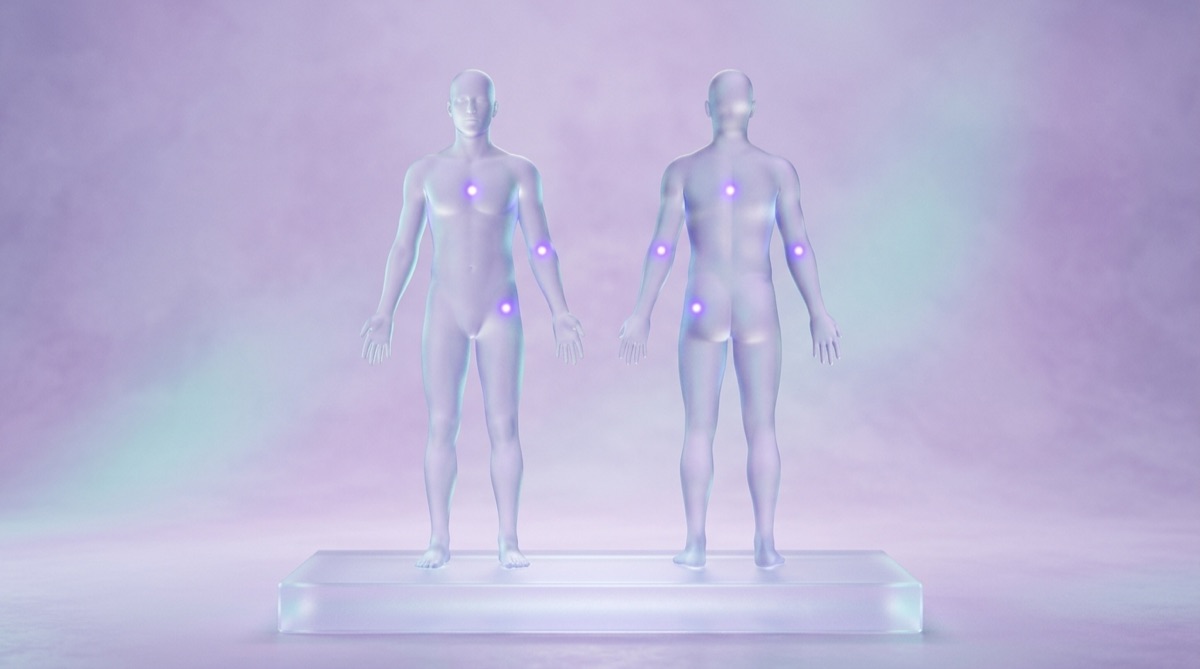
Body mapping is the practice of recording exactly where on a person's body a mark sits, what it looks like and when it was first seen. It is done on an outline of a human figure, front and back, and it is one of the few records a stranger can pick up months later and understand immediately. Bruises, skin tears, rashes, scars, pressure damage, grazes, burns, injection sites and patch sites all belong on a body map. This guide explains what a body map is, what a good body map form contains, when to complete one, how to describe a mark so the record stands up, and what an inspector will ask when they open the file.
The short answer
A body map is an outline drawing of the human body, front and back, on which staff mark the position of any injury, wound or skin change, numbered and cross-referenced to a written description. You complete one on admission as a baseline, whenever a new mark is found, after any fall or incident, when pressure damage is identified, and whenever there is any question about how an injury happened. Each entry needs a number on the diagram, a date, a time, a plain description with a size in centimetres, the name and signature of the person recording it, and what was done next. The map is not the whole record. It is the picture that makes the written record precise, and it is usually the first thing anyone looks at when a bruise of unknown origin turns into a safeguarding enquiry.
What is a body map?
A body map, sometimes called a body chart in a care home, is a standard anatomical outline used to show position. Most versions show the front and back of a whole body. Better versions add the palms and backs of both hands, the soles of both feet, a head from all four sides, and sometimes the inside of the mouth. The reason for the extra views is simple: the commonest places for marks in a care home are forearms, hands, shins, sacrum, heels and behind the ears, and a whole-body outline is too small to show those accurately.
The map on its own says almost nothing. What makes it useful is the numbered key beside it. Mark 1 on the diagram corresponds to entry 1 in the table, and entry 1 says what the mark looks like, how big it is, what colour it is, whether it is painful, and what happened next. Anyone can draw a circle on a drawing of a body. The value is in the description attached to the circle.
Why body maps matter more than staff think
Three things happen in care homes that body maps exist to deal with. The first is that people with care and support needs bruise easily, often for medical reasons, and cannot always say how it happened. The second is that skin changes over days, so what looks like nothing on Tuesday can be a grade 3 pressure ulcer by Sunday. The third is that allegations get made, sometimes about your staff and sometimes about a relative or another service, and the only defence anyone has is a contemporaneous record.
A home with good body mapping can answer the question that matters: was this mark there before, and if not, when did it appear and who saw it first? A home without it can only say that nobody remembers.
Body map, body chart, wound chart and skin bundle: what is the difference?
People use these terms interchangeably and then get confused about which record to complete. They are not the same thing, and most homes need more than one.
| Record | What it is for | When it is started | How often it is updated |
|---|---|---|---|
| Body map | Showing the position of any mark, injury or skin change on the body, with a description | On admission, and every time a new mark is found | Once per finding, then updated if the mark changes or resolves |
| Wound assessment chart | Tracking one specific wound: size, depth, tissue type, exudate, odour, dressing regime | When a wound needing dressing is identified | At every dressing change until the wound heals |
| Repositioning chart | Evidencing the pressure relief plan for a person at risk | When a skin risk assessment says repositioning is needed | Every reposition, around the clock |
| Skin inspection or skin bundle record | Routine daily or twice-daily checks of at-risk areas for a person with no current damage | When the risk assessment identifies raised skin risk | Daily, whether or not anything is found |
| Topical and patch administration record | Recording the site of creams and medicated patches so sites are rotated | When a topical medicine or patch is prescribed | Every application |
| Accident or incident report | The event that caused the injury, and the actions after it | At the time of the event | Once, then closed with outcomes and lessons |
A single fall can generate four of these in an hour: an incident report, a body map for the new bruise on the left hip, a wound chart for the skin tear on the forearm, and an entry in the daily notes. They are not duplication. Each answers a different question.
What a body map form must contain
If you are designing or reviewing a body map form, these are the fields. Anything less and the record will not hold up.
- Person's full name, date of birth and room or unit, printed on the form, not handwritten in a hurry
- Date and time the mark was observed, not the time the form was filled in
- Whether this is an admission baseline, a new finding, or a review of an existing mark
- Numbered outline diagrams: front, back, left and right side of the head, both hands, both feet
- A numbered table with one row per mark
- For each mark: exact site in anatomical terms, type of mark, size in centimetres in two dimensions, shape, colour, whether the skin is broken, whether it is painful or tender, and whether it is warm or swollen
- What the person said about it, in their own words, in quotation marks
- Whether a photograph was taken, and if so who authorised it
- Possible cause if known, and clearly marked as unknown if it is not known
- Action taken: GP contacted, nurse informed, incident report raised, safeguarding referral made, 999 called, dressing applied
- Name, job title and signature of the person recording, and of any witness
- Name and signature of the nurse or manager who reviewed it, with date and time
- Review date, and space to record whether the mark resolved, worsened or stayed the same
The anatomical views you actually need
A whole-body front and back outline is about seven centimetres tall on most printed forms. You cannot show the position of a two-centimetre bruise on the inner wrist accurately at that scale. This is the most common design failure in body map forms, and it is why staff resort to phrases like "bruise on arm".
Use a form with inset views. Both hands, palm and dorsum. Both feet, including the soles and the heels. The head shown from the front, back, left and right, because marks behind the ear and at the temple are significant and easy to miss. A separate sacrum and buttocks view is worth having in a home where pressure damage is a live risk. If you use a digital record, the same applies: a body map you can zoom into and drop a pin on is far better than one where the whole body fills a phone screen.
How to describe a mark so the record means something
"Bruise on left arm" is worthless three months later. Teach staff a fixed order and they will not have to think about it under pressure. Site, type, size, shape, colour, skin intact or broken, tenderness, temperature, what the person said, what you did.
Applied to a real finding, that becomes: "Left forearm, dorsal surface, 6cm above the wrist. Bruise. 4cm by 2.5cm, oval. Purple with a yellow edge. Skin intact. Jordan winced when the area was touched. No swelling, no heat. Jordan said 'I banged it on the rail, I think.' Nurse informed at 08:20. GP not required. Reviewed 48 hours."
That description can be checked, compared and defended. It also tells you something clinically: a yellow edge means the bruise is not new, which matters if the family raise a concern about an event last night.
Sizes, colours and the words to avoid
Always use centimetres and always give two dimensions. Comparisons to coins and fruit are unreliable. If a disposable paper measure is available, use it and say so.
Describe colour as you see it. Do not try to date a bruise from its colour. The evidence on bruise ageing is much weaker than most training courses imply, and an entry that says "bruise approximately four days old" will be challenged. Say what colour it is and let the clinician draw conclusions.
Avoid words that carry a judgement you cannot support. "Grab mark", "fingertip bruising", "non-accidental" and "suspicious" are conclusions, not observations. If the shape looks like separate round marks in a line, say exactly that: "four separate round bruises, each about 1cm, spaced in a line across the inner upper arm". That is a stronger record than a label, and it does not tie your safeguarding referral to a theory that later turns out to be wrong.
Photographs: when, how, and when not to
A photograph adds a lot to a body map and creates its own risks. My rule is that photographs are taken where they will help a clinical or safeguarding decision, with the person's consent where they can give it, with a best interests decision recorded where they cannot, and only on a device that belongs to the home and stores the image inside the care record.
Never use a personal phone. Not once, not for convenience, not because the work tablet is charging. Images of a resident's body are special category personal data and a photograph on a member of staff's phone is a data breach waiting to be reported to the Information Commissioner's Office.
When a photograph is taken, include something for scale, ideally a disposable paper ruler, and take one wider shot showing where on the body the mark is as well as a close shot. Record who took it, when and why. Do not photograph intimate areas unless a nurse or the police have asked for it and the reason is written down. For intimate areas the written description usually has to do the work, and that is one more reason to train staff to describe well.
Consent, dignity and the personal care boundary
Body mapping is not an excuse to inspect someone. A person who can consent must be asked, and can say no. Record the refusal, tell the nurse in charge, and try again later with someone the person trusts. A refusal is information, not a dead end.
Where the person lacks capacity for this specific decision, follow the Mental Capacity Act: assume capacity, support the person to decide, assess if there is real doubt, and if they lack capacity make a least restrictive best interests decision that is recorded. The Mental Capacity Act and DoLS checklist sets out how to record that properly. In practice most skin checks happen during personal care that the person already accepts, and the mapping is observation rather than a separate procedure.
The admission baseline: the most valuable body map you will ever complete
Every new resident gets a full body map within the first 24 hours, and ideally during the first episode of personal care. Two staff, one recording. Every existing mark noted, every scar, every skin tear from the hospital ward, every bruise from the cannula. If the person declines, record the decline and try again the next day, and keep trying.
The baseline is what tells you a month later that the mark on Priya's shoulder was there when she arrived from hospital. Without it, the honest answer to the family is that you do not know, and that is the sentence that turns a conversation into a complaint. Treat the admission body map as part of the admission checklist, alongside the medicines reconciliation and the first risk assessments.
When a body map must be completed
- On admission, within 24 hours, as a full baseline.
- On return from hospital, respite or a stay with family, as a fresh baseline.
- Whenever a new mark of any kind is found, at the time it is found.
- After every fall, even where the person says they are fine and even where nothing is visible at first.
- After any incident involving physical contact, including resident-to-resident incidents and any physical intervention.
- When pressure damage is suspected or identified, alongside the wound chart.
- When a person has been found in a position that could have caused injury, such as wedged against a bedrail.
- When an allegation of abuse is made, before or alongside the safeguarding referral.
- At the point a mark changes significantly, so the progression is documented.
- Where a care plan specifies routine mapping, for example for a person who self-injures or who has fragile skin.
Body maps and safeguarding
Most safeguarding enquiries about injuries in care homes turn on two questions: when did it appear, and what did the home do when it was found. A body map answers both if it is completed at the time and reviewed by a manager the same day.
A bruise of unknown origin is not automatically a safeguarding concern, but it is a safeguarding decision. The manager looks at the site, the pattern, the person's medical history and mobility, and any previous marks, then decides. Bruising in a site that is hard to injure accidentally, such as the inner thigh, the neck, the inner upper arm or the ear, should ordinarily go to the local authority. So should any repeated pattern of unexplained marks on one person, and any unexplained mark on a person who cannot report what happened. The guide to safeguarding adults in care homes covers the section 42 threshold and the referral route.
Do not wait for certainty. The local authority decides whether an enquiry is needed; you decide whether to raise the concern. A body map attached to the referral, with clear sizes and a clear timeline, is what makes the safeguarding team take your referral seriously and makes your home look like one that is paying attention.
Body maps after a fall
Falls produce marks that appear hours later, which is why the post-fall process should include a body map at the time and another at 24 hours. Head injuries in particular need the neurological observations that your post-fall protocol sets out, and a mapped record of any mark on the scalp or behind the ear, where blood tracks after a head injury.
Link the body map to the incident record rather than keeping them separately. If the two live in different places, the analysis at the end of the month will be done on the incident reports only and the injury pattern will be invisible. The article on falls risk and the post-fall process sets out the full sequence, and incident reporting in care homes explains the rest of the record.
Body maps and pressure damage
Pressure damage begins as a patch of redness that does not blanch when you press it. Mapping that patch, with its exact site and size, is the only way to prove later whether it improved or progressed, and whether it was present on admission or developed in your care. This is not a bureaucratic distinction. A pressure ulcer that develops in your home may be reportable and will be looked at closely.
The body map records position and appearance. The wound chart records category, tissue type, exudate and dressing. Keep both, and keep the repositioning chart running alongside. For the risk assessment and prevention side, see pressure ulcer prevention.
One practical detail: photograph and map heels. Heel damage is missed more often than sacral damage because the sacrum gets looked at during personal care and heels are inside socks.
Body maps in learning disability services
In a learning disability home the person may not be able to tell you that something hurts, may not connect an injury to an event, and may have a history of self-injury that makes new marks easy to dismiss. That combination is exactly why mapping matters more here, not less.
Build the skin check into an existing routine, such as support with a bath, and write into the support plan how the person likes it done and who they prefer to do it. Record refusals. If someone who usually accepts support starts refusing to be seen undressed, that itself is a safeguarding trigger. Where a person self-injures, the map is the evidence base that tells you whether the behaviour is increasing, changing site, or getting more severe, and it should sit alongside the ABC charts and the behaviour support plan rather than being filed somewhere else.
Body maps and restrictive practice
Any physical intervention, including a guided escort or a supported hold, must be followed by a physical check and a body map. That is not because your staff are suspected of anything. It is because holds cause marks, marks get noticed days later by a relative, and the only thing that protects everyone is a record made at the time by the staff who were there, reviewed by someone who was not.
Record the intervention in the incident system, the marks on the body map, and the debrief with the person and with staff. Where a person is held regularly, the pattern of marks is one of the strongest signals that the technique or the frequency needs reviewing, and it is the kind of evidence a commissioner or inspector will ask for directly.
Body maps for patches and topical medicines
Medicated patches must be rotated and removed, and the commonest patch error is the old one being left on, which is hard to spot without a site record. A body map used at the point of administration solves it: the worker taps the site, sees where the last patch went, confirms removal of the old one, and records the new site. The same applies to creams where a person has several different topical products.
Who completes a body map and who checks it
Any trained care worker can complete a body map. It is an observation, not a clinical assessment, and waiting for a nurse means the record is made hours later from memory. The check is what must not be optional. A nurse or the manager reviews every body map the same day, signs it, and decides whether anything further is needed.
Where the mark is unexplained, two people should see it and both should sign. Where there is an allegation involving a member of staff, the person who completes the map should not be the person the allegation concerns, and the manager should be involved immediately.
Two worked examples
Priya
Priya is 84, has dementia, takes apixaban and mobilises with a frame. At 07:40 a care worker supporting her to wash sees a large bruise on the right hip. Priya cannot say what happened.
The worker completes a body map at 07:45: right lateral hip, 9cm by 6cm, irregular, deep purple, skin intact, Priya flinched on contact, no swelling. She tells the nurse, who attends at 07:55, agrees the description, checks range of movement and pain, and signs the map. The manager reviews it at 09:00, checks the previous two weeks of daily notes and the incident log, and finds an unwitnessed fall three days earlier with no visible injury at the time. She contacts the GP because of the anticoagulant, records the call, and makes a safeguarding referral because the origin cannot be confirmed and Priya cannot report what happened. The family is told the same morning.
The enquiry closes in eleven days. What closed it was the sequence: a mapped record, a same-day review, a documented earlier fall, a GP contact and an honest call to the family.
Marcus
Marcus is 31, has a learning disability and autism, and communicates with objects of reference. A support worker notices three small round bruises in a line on his left inner upper arm during support with dressing.
The worker records the site and the pattern exactly as seen, without using the phrase "grab marks". She reports it to the manager immediately. The manager sees the marks with a second worker present, checks the rota for the previous 48 hours, checks the incident log and the ABC charts, and makes a safeguarding referral that day because the site is one that is difficult to injure accidentally and Marcus cannot explain it. The local authority holds a strategy discussion, staff on duty at the relevant times are interviewed, and the enquiry finds that a support worker used an unapproved hold during a moment of distress. The worker is referred to the DBS and the technique is retrained across the team.
The body map proved nothing on its own. It fixed the facts at a point in time so the enquiry had something solid to work from.
Paper body maps and how they fail
Paper body maps fail in predictable ways. The form is in a folder in the office, so the worker finishes personal care, gets distracted and writes it up at the end of the shift with the sizes guessed. A resident accumulates eleven separate maps over a year and nobody can find the previous one to compare. Photographs live on a memory card in a drawer. The monthly audit means reading every folder, so it does not happen.
None of that is a reason to abandon paper if paper is what you have. It is a reason to put the forms where personal care happens, keep a running index at the front of the file, and audit properly.
Digital body maps: what actually changes
On a digital record the worker taps the site on an outline on the device they are already holding, adds the description, photographs it into the record rather than onto a phone, and the entry is time-stamped and attributed automatically. The manager sees it as an alert rather than at the end of the month.
The more useful change is the history. Every mark for one person appears on one timeline, so you can see that this is the fourth bruise on the same forearm in six weeks. That pattern is nearly invisible on paper. Systems that combine care records, incidents and body maps in one place, as Kiwi does, mean the body map, the incident and the daily note are the same record rather than three that have to be matched up later.
What digital does not change: the quality of the description, whether staff look at the skin at all, and whether anyone reviews what has been recorded. A bad description on a tablet is still a bad description.
What to do in the first hour after finding an unexplained mark
- Make sure the person is safe and comfortable, and deal with any bleeding or pain first.
- Complete the body map there and then, with sizes measured, not estimated.
- Ask the person what happened, in an open way, and write their answer in their own words.
- Tell the nurse or person in charge immediately. Do not wait for handover.
- Raise an incident report and link the body map to it.
- The manager reviews the same day and decides on a safeguarding referral, a GP contact, or both.
- Contact the family or representative the same day, unless a safeguarding decision says otherwise.
- Set a review date and record what the mark looks like at that review.
The manager's monthly body map audit
Ten minutes a month will tell you more than most audits. Pull the body maps completed in the month and ask six questions.
- Does every new admission have a baseline map dated within 24 hours of admission?
- Does every fall and every incident involving contact have a corresponding body map?
- Are sizes recorded in centimetres in two dimensions, or is the form full of "small" and "large"?
- Was each map reviewed and signed by a nurse or manager on the same day?
- Is any individual accumulating unexplained marks, and has anyone looked across the month rather than at single events?
- Do any marks cluster around a particular shift, a particular task or a particular time of day?
Write the findings and the actions down. An audit with no recorded action is not an audit, and the actions are what an inspector reads first.
What an inspector asks about body mapping
Expect questions like these. Show me the body map for this resident from admission. Show me what happened after this fall. This care plan says the person has fragile skin, so where are the skin checks? Who reviewed this map and when? What did you tell the family? Why was this bruise not referred, and who made that decision?
They will also ask a care worker, not you, what they would do if they found a bruise during personal care. The answer they want is specific: record it on a body map straight away, tell the nurse, do not wait for handover. If the worker says they would mention it at handover, your training has a gap, whatever the policy says. This is the sort of evidence inspectors look for under safe care and treatment and under safeguarding, and it comes from practice rather than paperwork.
Training staff to body map well
Body mapping is usually covered in a slide inside a safeguarding course, which is not enough. Run a twenty-minute practical session instead. Give everyone a blank form and a photograph of a mark, and ask them to describe and map it. Compare the answers out loud. The gap between the best and the worst description in the room is the training need.
Cover: the fixed order of description, measuring in centimetres, quoting the person, what not to write, when to tell someone, photographs and devices, and the difference between observing and concluding. Include bank and agency staff and record who has been trained, because an agency worker who has never seen your form is the person most likely to find a mark at three in the morning.
Records, retention and data protection
Body maps and clinical photographs are health data and count as special category data under UK GDPR. Keep them in the care record, control who can see them, and retain them in line with your retention schedule, which for adult social care records is commonly eight years after the person leaves or dies. Do not keep clinical images on shared drives, personal devices or messaging apps.
If you are asked to share a body map with the local authority, the police or CQC as part of a safeguarding enquiry, you can. Sharing personal data to protect someone from abuse or neglect is lawful, and the statutory guidance expects it. Record what you shared, with whom and why.
Common mistakes
- Writing it up later. Descriptions written at the end of a shift are vaguer and legally weaker.
- Estimating sizes. "Small bruise" tells the next person nothing and cannot be compared.
- Using conclusions as descriptions. "Grab marks" is a theory. Describe what you see.
- Photographs on personal phones. A data breach, every time, with no exceptions.
- No admission baseline. Everything afterwards becomes an argument.
- Maps filed and never reviewed. Patterns across weeks are invisible if nobody looks across weeks.
- No manager sign-off. An unreviewed map is a note, not a system.
Body maps and the care plan
A body map is a record of an event. If marks keep appearing, the care plan has to change. Fragile skin means a skin care plan with emollients, protective sleeves, padding on the wheelchair footplate and a repositioning schedule. Repeated shin knocks mean a mobility or environment review. Repeated hand bruising in someone on anticoagulants means an occupational therapy assessment and possibly a medicines review.
The test of whether body mapping is working in your home is not how many maps you have. It is whether anything changed because of them. If you have thirty body maps and no care plan amendments, you are collecting evidence of harm rather than preventing it.
Body mapping and duty of candour
Where a mark represents a notifiable safety incident, for example a pressure ulcer that caused significant harm or an injury from a fall, the duty of candour applies. Tell the person or their representative as soon as reasonably practicable, apologise, explain what you know and what you are doing to find out more, and confirm it in writing. Families forgive a lot when they are told promptly. What they do not forgive is finding a bruise themselves on a Sunday visit and discovering that the home knew on Thursday.
Final conclusion
Body mapping is a small discipline with a big return. An outline of a body, a number, a date, a measured description and a signature, done at the moment the mark is found rather than at the end of the shift. Do it on admission for everyone, after every fall, whenever a new mark appears, and whenever anything is unexplained. Have a nurse or manager check it the same day. Look across the month for patterns and change the care plan when you find them. Keep photographs inside the care record and off personal phones. Done that way, body maps protect residents from harm going unnoticed, protect staff from unfounded allegations, and give you the clear, contemporaneous evidence any inspector or safeguarding team will ask you for. If you want to see how mapping, incidents and daily records sit together in one record, book a demo.
Frequently asked
What is a body map in a care home?
A body map is an outline diagram of the human body, front and back, on which staff mark the exact position of any bruise, wound, rash, scar or skin change, with a numbered written description beside it. It is used on admission as a baseline, after falls and incidents, and whenever a new or unexplained mark is found.
When should a body map be completed?
Within 24 hours of admission, after any return from hospital or time away, at the moment any new mark is found, after every fall, after any incident involving physical contact including physical interventions, when pressure damage is suspected, and whenever an allegation of abuse is made. It should be completed at the time, not written up at the end of the shift.
Who can complete a body map?
Any trained member of care staff can complete one, because it records observation rather than clinical assessment. A nurse or the registered manager should review and sign every body map the same day, and where a mark is unexplained two people should see it and both should sign.
Does an unexplained bruise always mean a safeguarding referral?
No, but it always means a safeguarding decision that someone records. Refer where the site is hard to injure accidentally, such as the inner thigh, neck, inner upper arm or ear, where the person cannot say what happened, where there is a pattern of repeated marks, or where an allegation has been made. When in doubt, refer and let the local authority decide.
Can I photograph a resident's injury?
Only on a device belonging to the service that stores the image inside the care record, with the person's consent or a recorded best interests decision, and with a clear reason. Never use a personal phone, because images of a resident's body are special category data and a phone copy is a reportable data breach. Include a scale in the picture and take both a close and a wider shot.
How should staff describe a mark on a body map form?
Use a fixed order: exact anatomical site, type of mark, size in centimetres in two dimensions, shape, colour, whether the skin is broken, tenderness, heat or swelling, what the person said in their own words, and what was done next. Avoid conclusions such as grab marks or non-accidental, and do not try to date a bruise from its colour.
What is the difference between a body map and a wound chart?
A body map shows where marks are on the body and describes them at the point they are found. A wound assessment chart tracks one specific wound over time, recording size, depth, tissue type, exudate and the dressing regime at every dressing change. A person with a wound normally needs both.
How long should body maps be kept?
Keep them as part of the care record and apply your retention schedule, which for adult social care records is commonly eight years after the person leaves the service or dies. Clinical photographs are part of the same record and must be stored with the same access controls, never on shared drives or personal devices.
Sources
- Health and Social Care Act 2008 (Regulated Activities) Regulations 2014, Regulation 12: Safe care and treatment
- Health and Social Care Act 2008 (Regulated Activities) Regulations 2014, Regulation 13: Safeguarding service users from abuse and improper treatment
- Care Act 2014, section 42, and the Care and support statutory guidance, chapter 14
- Care Quality Commission: single assessment framework and quality statements
- NICE guideline CG179: Pressure ulcers, prevention and management
- Royal College of Nursing: record keeping, the facts
- Information Commissioner's Office: guidance on special category data under UK GDPR
- Mental Capacity Act 2005 Code of Practice